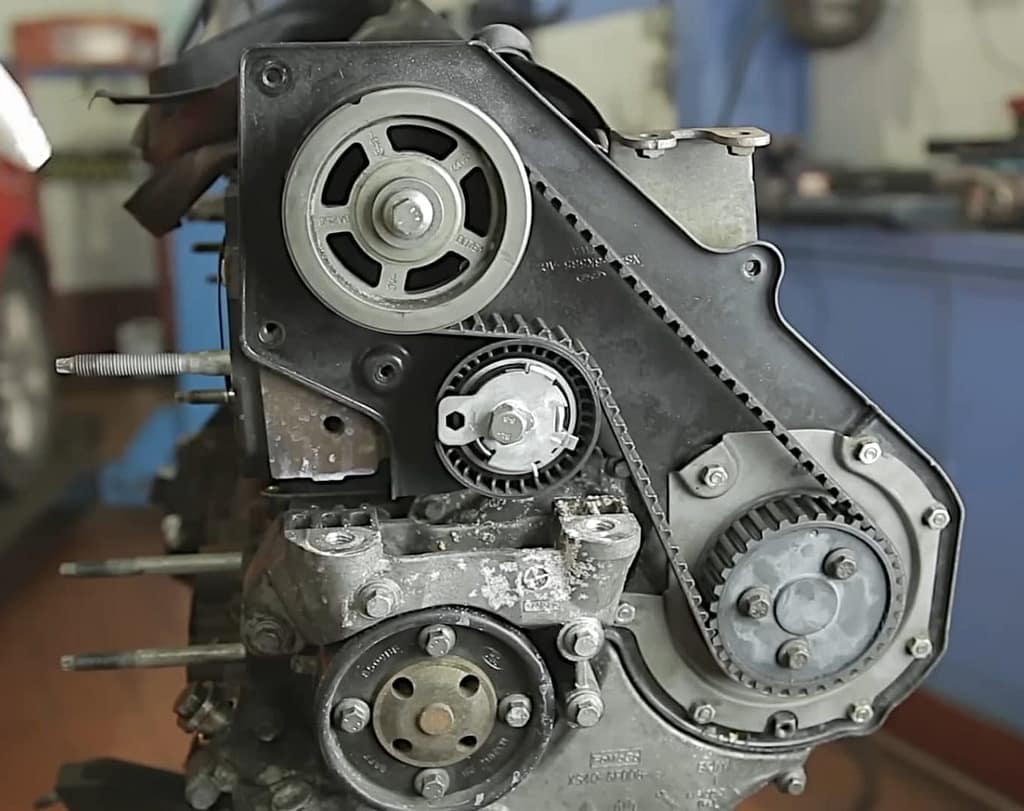
Cambelt Replacement Reading is an important part of your car that requires replacement. It is a serviceable item that needs replacing at a certain mileage and Age covered by your car.
This varies from car to car. You will find this information in your car’s handbook, and it will recommend when it will require replacing, which is normally between 40,000 miles and 60,000 miles intervals. If in doubt, please contact us.
We will happily advise you when this requires replacing, saving you lots of money in the process. It is common to replace both the timing belt tensioner and the timing belt.

Cambelt Replacement Reading
We recommend when replacing timing belts that the water pump is also replaced at the same time if this happens to be on the same pulley as the timing belt, as the water pump is also a vital part of the whole process and our prone to seizing as the bearings where especially if the water pump has covered the same amount of mileage as the Cambelt we are about to replace
Seized water pumps
Siezed Water Pumps do the same damage to a engine as if the Cambelt had not been changed at the correct mileage covered and is a very expensive mistake as some water pumps cost as little as £30.00.
In the internal combustion engine application, the timing belt or chain connects the crankshaft to the camshaft(s), which control the opening and closing of the engine’s valves.
A four-stroke engine requires that the valves open and close once every other crankshaft revolution. The timing belt does this. It has teeth to turn the camshaft(s) synchronized with the crankshaft, and is specifically designed for a particular engine.
In some engine designs, the timing belt may also be used to drive other engine components such as the water pump and oil pump.
Timing Chain Replacement Reading
Many modern cars have timing chains and These will never need replacing as long as you service your car and replace the engine Oil regularly correct intervals and use the correct grade of Engine oil
This is a very important factor when relating to timing chains, as they rely on good, clean oil in your engine at all times. Keeping them well-oiled should ensure they last the life of your engine if maintained properly as timing chain replacements can be very expensive as it is very labour intensified to replace Engine timing chains
The Opening And Closing of Engine Valves
A four-stroke engine requires that the valves open and close once every other crankshaft revolution. The timing belt does this. It has teeth to turn the camshaft(s) synchronized with the crankshaft, and is specifically designed for a particular engine.
In some engine designs, the timing belt may also be used to drive other engine components such as the water pump and oil pump.
Cambelt And Timing Chain Replacement Reading
What is a Timimg Belt Or Cambelt?
This process ensures that your engine operates efficiently
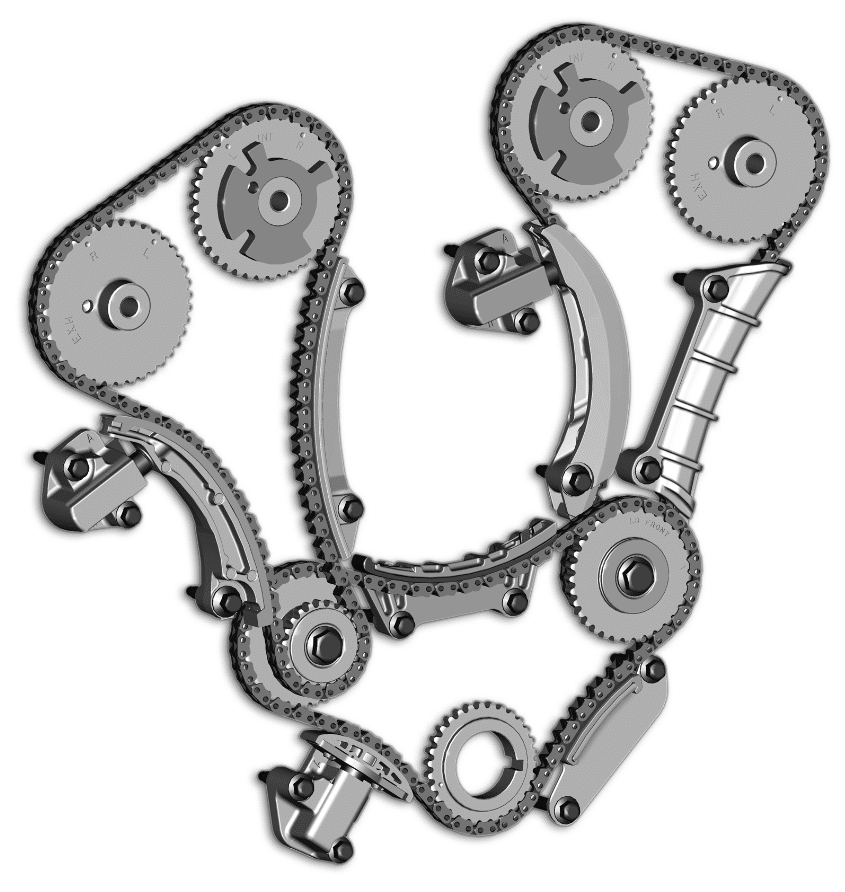
Typical Timing Chain Layout this chain sits inside the engine unlike a cambelt On the Outer of the engine
Why Is A Timing Chain Replacement Important?
1. Mileage
2. Cracks or Damage
3. Engine Noise
4. Check Engine Light
If your vehicle’s dashboard shows a “Check Engine” light,
Cambelt replacement is a detailed process typically involving the following steps
1. Preparation
2. Remove Components
3. Replace the Cambelt
4. Reassemble
5. Engine Test
Wet Belt Replacement Reading
Wet Belt Replacement Costs In Reading
The Importance of Regular Wet Belt Timing Belt Maintenance
Regular maintenance of the wet timing belt is critical for Ford EcoBoost 1L engines. As highlighted by Ford themselves, these specialised belts should be replaced every 5/8 years or 60,000 miles – whichever comes first.
As mentioned before, we recommend the wet timing belt to be replaced at no more than 8 years or 60,000 miles and at a recommended 5 years or 50,000 miles, to ensure your engine runs smooth and to prevent any further more devastating issues that may arise from a worn or damaged wet timing belt.
Impact of degraded engine oil on the wet belt’s material and potential consequences
If oil changes are missed, oil breakdown deposits sludge inside the engine that can clog passages and cause premature belt wear. Small bits of damaged belt can then circulate in oil and clog the screen on the oil pump pickup, starving the engine of vital lubrication.
This ripple effect means a degraded wet belt can lead to complete engine failure. Regular oil changes are critical and crucial to be carried out and correct intervals

